


SMARTIDIOM

HomeHuman translationTechnical translation
Services · Human translation · Specialised technical translation

Technical translation
by people who know
your industry

In technical translation, a wrong unit or a poorly chosen term can stop a production line. That is why our technical translation services put your technical documentation (manuals, specifications, patents, safety procedures, e-learning or software) in the hands of native translators who know the terminology of your field. They work with glossaries built for your projects and approved by you, and check every measurement, conversion and currency. At the levels that include revision, before delivery, a second specialist carries out an independent revision, as required by ISO 17100, to which we are certified.

01AnalysisISO 9001 02TranslationISO 9001 03RevisionISO 17100 04ChecksISO 9001 05DeliveryISO 9001 IN OUT
CertificationsISO 9001 · ISO 17100 · ISO 18587
37countries served
98%+on-time deliveries
<0.02%post-delivery correction rate
250+language pairs
Document types

Technical translation
for every document
behind your product

A maintenance manual, a patent or a validation report is not translated like any other text. Whoever translates it has to know the field, be it engineering, medicine or IT, and use the exact term, not a similar one.

Technical documentation is any text that someone will use to assemble, operate, repair, approve or protect a product. In technical translation, that includes instruction and maintenance manuals, engineering specifications, validation reports, patents, safety procedures, e-learning and software.

Below are the technical documents we are most often asked to translate. Select a number to see how we handle each one.
Fig. 1 · Technical manual page
01 · INSTRUCTIONS p. 12/48 02 · FIGURES · UNITS 3048 mm 24 °C 1.6 kg 03 · TERMINOLOGY GLOSSARY · APPROVED TERM 04 · SAFETY WARNINGS WARNING 05 · VOICE-OVER · SUBTITLES 06 · STRINGS · PLACEHOLDERS "btn_save": "Speichern""msg": "Noch {0} Felder""dir": "rtl" 01 02 03 04 05 06
01Select the instructions

Technical manual and instructions translation

  • Technical user, maintenance and manufacturing manuals, instructions for use (IFU), procedures and SOPs
  • How we work
  • Before we start, we agree with you on the name of every part and every action, and we use the same name from start to finish.
  • Each step tells the technician what to do, in the right order.
  • Before delivery, we check the warnings, the measurements and the figure references.

Revision history

How we handle
a technical translation,
step by step

The steps are always the same. What changes from level to level is how much control we add. At the levels that include revision, the document goes through two people, both native speakers of the target language and specialised in your industry. ISO 17100 requires that the reviser is not the translator. At the translation-only level, there is no independent revision.

Show the process for

Translation and revisionAfter translation, another specialist reads the whole text against the original and corrects whatever is needed. Every sentence goes through two people.

Technical analysis

Field, standards, units, terminology, risk
Before we start, we analyse the document with you: the field, the applicable standards, the units and the technical terms that must be exactly right. We build the glossary and choose who translates and who revises, both specialists in your field.
OwnerProject manager
Machine translation and post-editing

When the volume is large and the deadline is short

Manuals, technical data sheets and catalogues repeat a lot of sentences. That is where machine translation really pays off. We use private engines, trained on your terminology, and a post-editor goes through the whole text, sentence by sentence. This is called “full machine translation post-editing” (MTPE), and our process is certified to ISO 18587.

See how machine translation and post-editing work
Industries

Your industry has its own rules.
Your documentation has them too.

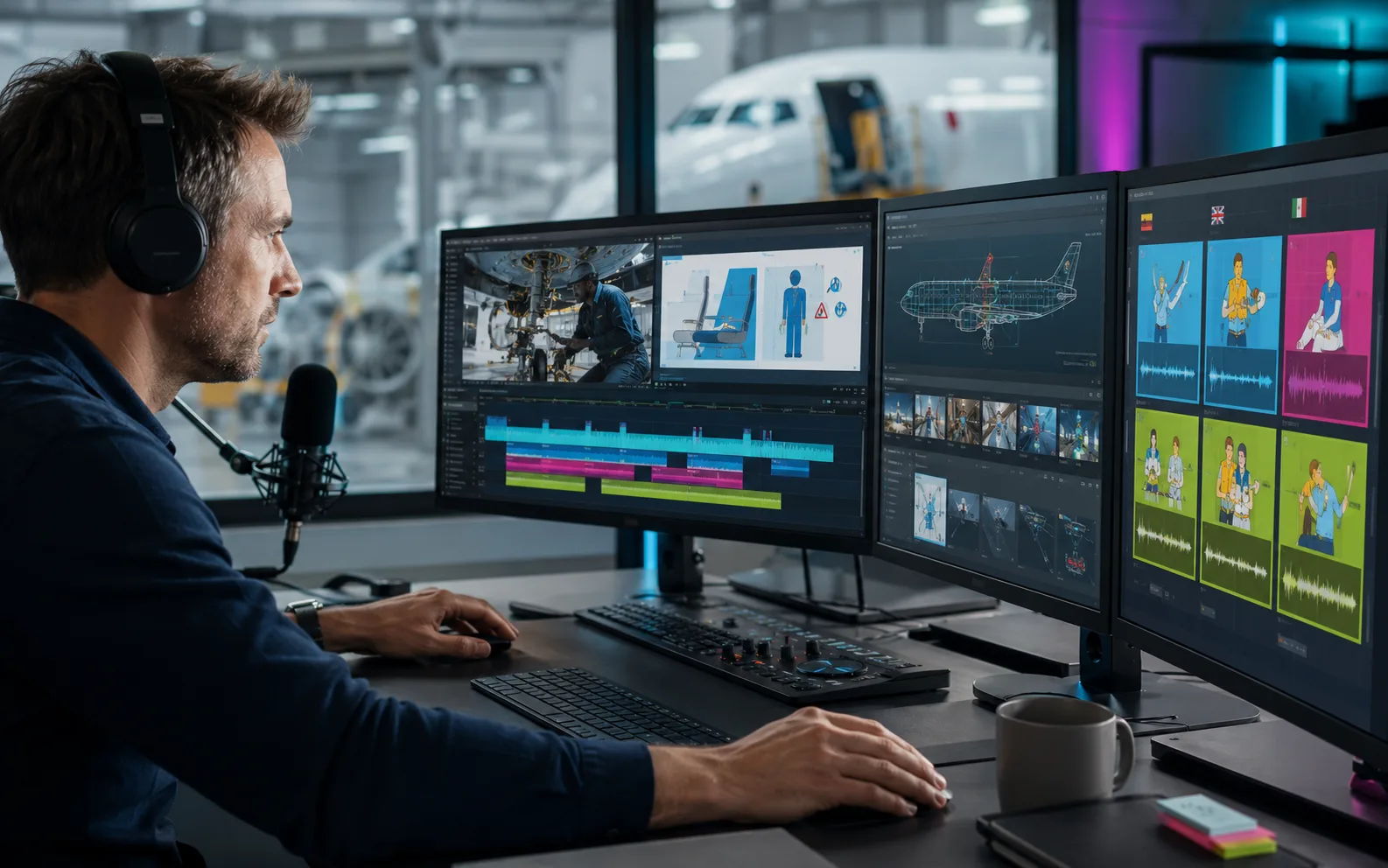
What matters in a manual changes from industry to industry. In a pharmaceutical plant, it is the traceability of every stage. In an aircraft hangar, it is carrying out every maintenance step exactly as written. Choose your industry and see real projects we have worked on.

Documents we translate

Health, life sciences and pharmaceuticals

Regulatory submissions, IFU, manufacturing SOPs and labelling, with EDQM and MedDRA terminology applied and verified

450,000wordsfor three markets, in 18 days, for a Portuguese pharmaceutical company
See what we have done in this industry
Delivery

What you keep when the project ends

What you receive when the project closes, and what you can keep using afterwards

PACKING LIST SMARTIDIOMDELIVERY · REV. 04 PROJECT GLOSSARY valveVentil torqueDrehmoment switchSchalter APPROVED BY YOU APPROVED TERM PROJECT MEMORY 100% 85% TMX TBX OPEN FORMAT RECORD · REV. 04 Analysis08/09 Translation09/09 Revision11/09 Delivery12/09 LQA METRICS TMS CMS API XTM · MEMOQ · TRADOS
  • E-01

    The delivery

    The translated document in the same format it arrived in, with the formatting, drawings and diagrams preserved. If the layout has to be redone, we handle the DTP, which is quoted separately.

  • E-02

    One glossary across every document

    Our ground rule is a glossary approved by you and maintained from project to project, so that the same component always has the same name in the manual, the interface and the training materials.

  • E-03

    The translation memory, delivered whenever you ask

    Everything we translate goes into your project’s translation memory. Repeated sentences are not paid for in full again, and each new project tends to be faster and cheaper. The memory and the glossary are available to you whenever you ask for them.

  • E-04

    Traceability

    We deliver the record of every stage, with names, dates and versions, and the LQA report when the level includes it, all ready to show an auditor.

  • E-05

    Integration, if you want it

    We connect to your TMS (XTM, memoQ or Trados, for example) and your CMS, via API or connectors, and deliver at the pace of your work cycles.

Frequently asked questions

What is technical translation?

+
Technical translation is the translation of documentation that someone will use to assemble, operate, repair, approve or protect a product: manuals, specifications, patents, safety procedures, e-learning and software. At SMARTIDIOM, it is carried out by native translators specialised in your industry and, at the levels that include revision, revised by a second specialist, as ISO 17100 requires.

What is the difference between technical translation and certified translation?

+
Technical translation is for people who will use the document day to day; a certified translation is a translation with legal effect in Portugal, declared by the translator and certified before a lawyer, a solicitador (a Portuguese legal professional) or a notary, to be submitted to an authority.

Who translates my technical documentation?

+
In human translation, your documents are always handled by a technical translator who is a native speaker of the target language and specialised in your field, never a generalist. If you choose machine translation post-editing, a linguist with the same profile post-edits the engine output. For regulated content, the team is chosen for its track record and experience in your industry.

Do you translate CAD drawings, diagrams and software files?

+
Yes, we translate technical drawings, diagrams and schematics, keeping the original formatting whenever the file allows it. For software localisation, we connect to your TMS (for example XTM, memoQ or Trados) and your CI/CD pipeline, via API or connectors, and new strings come in and go back translated through your workflow. If the layout has to be redone after translation, we handle that too.

Do you use machine translation for technical documentation?

+
We use machine translation for technical documentation when it pays off, and we always tell you when that is the case. The typical example is a large volume with a repetitive structure: a private engine trained on your terminology and full post-editing by a linguist, in a process certified to ISO 18587, aiming for a result comparable to human translation. Our policy prohibits the use of public engines for client content, and that prohibition is also written into our external linguists’ contracts. We work under NDA, in line with the GDPR and in a private environment.

How long does it take you to translate a technical manual?

+
A specialist translator produces, on average, 2,000 to 2,500 words a day, and the independent revision takes additional time. For large volumes we build teams with shared terminology: we have delivered 450,000 words for three markets in 18 days, and 250,000 words of HSE documentation in two weeks. Tell us your deadline and we will tell you whether it can be done, and how.

How much does a technical translation cost?

+
The price is per word and depends on the language pair, the technical field, the volume and the level of assurance you choose (translation only, with revision, or with revision and LQA). Repetitions cost less, because they are already in the translation memory, so the cost per document tends to fall from project to project. Send us the document and we will tell you how much it costs.