A great digital experience brings customers back – every time
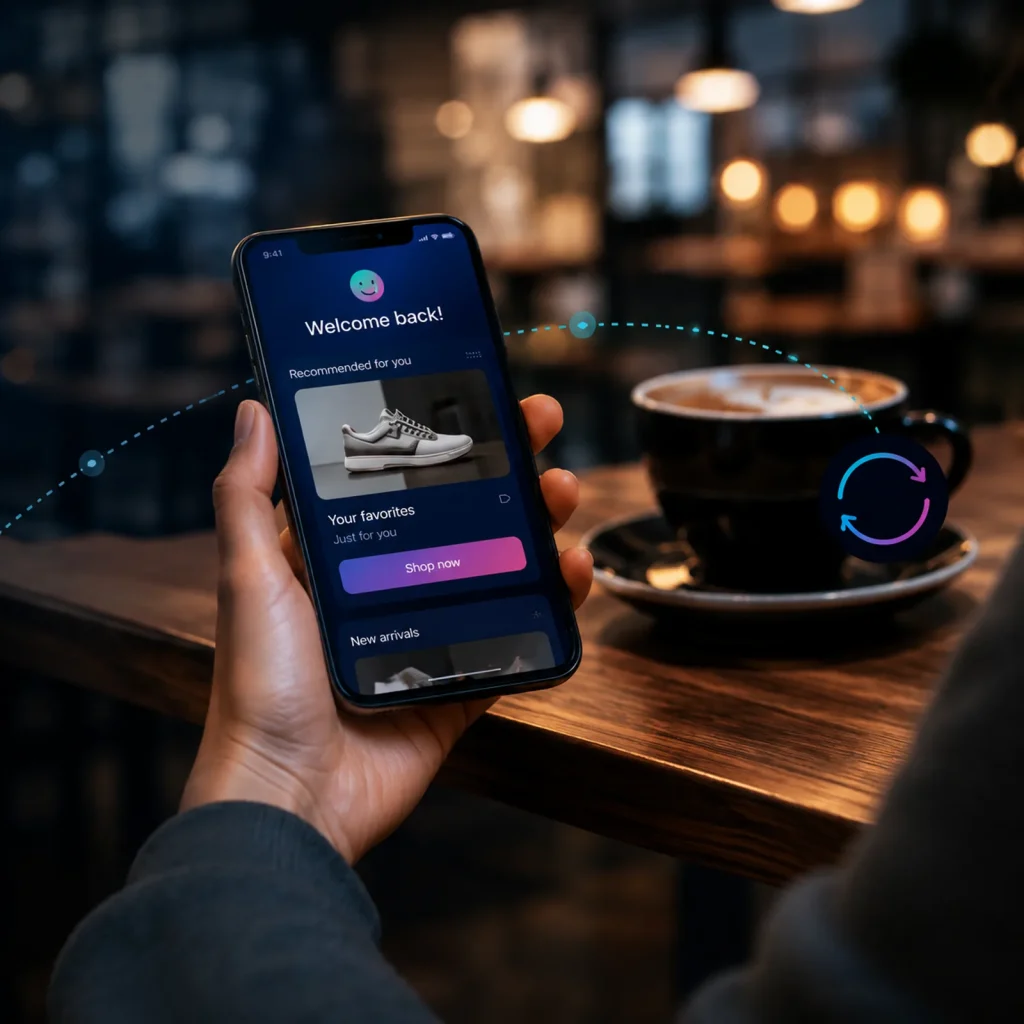
A strong digital experience brings customers back because it makes every interaction feel clear, natural and trustworthy. In Customer Experience, that means removing linguistic and cultural friction so people understand, decide and act without hesitation. Localisation is not cosmetic; it is what makes a digital journey feel built for the customer. In markets where a buyer can leave with one click, the brands that win are not only the ones with the best product. They are the ones that make the path to understanding effortless. If your website, platform, app or client portal feels foreign, generic or machine-made, users hesitate. Hesitation is where conversions, trust and loyalty are lost. Why does digital experience decide whether customers return? Customers return when the experience feels familiar enough to trust and simple enough to repeat. A good product may attract attention once, but a frictionless experience is what makes people come back without needing to rethink the decision. In B2B sectors, this matters even more. Buyers are not browsing casually; they are comparing risk, reliability, clarity and credibility. In regulated industries such as pharma, legal, fintech, defence and energy, a vague message or awkward interface can make a brand look careless, even when the underlying offer is strong. Digital experience is therefore not just a design concern. It is a business continuity concern. It affects whether people understand your value proposition, whether they trust your processes and whether they feel confident enough to move to the next step. How does localisation remove friction from Customer Experience? Localisation removes friction by making content, structure and tone feel native to the user’s context. A localised journey allows customers to understand your offer without translating it mentally, questioning your intent or adapting themselves to your internal language. Customers do not want to interpret your message. They want clarity, familiarity and ease. If a call-to-action sounds unnatural, a form label creates doubt or a service description uses the wrong register, the user slows down. That slowdown matters. In digital journeys, hesitation weakens confidence. The user may not consciously think “this is poorly localised”, but they will feel that something is harder than it should be. Good localisation addresses several layers at once: Language that sounds natural in the customer’s market. Terminology that matches sector expectations. Tone that fits the relationship and level of risk. Interface wording that supports fast, confident action. Cultural references, formats and conventions that feel familiar. This is why literal translation is rarely enough. A translated page may be understandable, but a localised experience feels usable, credible and made for the audience. What makes a localised interface easier to trust? A localised interface is easier to trust because it reduces cognitive effort. When users feel “at home” in a digital space, they navigate more confidently, compare options more calmly and complete actions with fewer doubts. The best interfaces do not feel translated. They feel as if they were created for that market from the start. That is the difference between linguistic accuracy and cultural usability. Navigation must match how users expect information to be organised. If menus, filters or help sections follow unfamiliar logic, the user may assume the service itself will be equally difficult to use. Microcopy must guide action without sounding robotic. Buttons, error messages, confirmations and form instructions are small pieces of text, but they carry a disproportionate amount of trust. Tone of voice must reflect the customer relationship. A fintech onboarding flow, a legal services page and a healthcare professional portal should not sound the same, even when the words are technically correct. Terminology must align with the sector. In specialised B2B environments, imprecise language can signal weak expertise, even before a sales conversation begins. Customers come back when the digital journey feels not translated, but built for them. Why does familiarity build trust in competitive markets? Familiarity builds trust because it reassures users that the brand understands their context. In a market full of polished platforms and strong products, credibility often depends on the details that make an experience feel human, consistent and relevant. A generic digital experience is easy to ignore. A robotic one is easy to distrust. Customers may not have time to investigate why a message feels wrong; they simply move on to a competitor that feels clearer. This is especially true when the purchase involves risk, internal approval or regulatory scrutiny. A buyer wants to know that the provider can operate professionally in their language, market and sector. Localisation becomes evidence of seriousness. Trust is built through consistency: The website matches the sales material. The product interface matches the support experience. The terminology matches the customer’s sector. The tone matches the level of decision being made. When these elements are aligned, the experience feels stable. Stability makes the brand easier to choose and easier to return to. Can AI improve localisation without weakening quality? AI can improve localisation by accelerating workflows, supporting scale and helping teams process large volumes of content faster. But AI alone cannot guarantee meaning, tone or cultural depth. The right approach is AI for efficiency and human expertise for judgement. AI is useful when the task demands speed, consistency checks or first-pass processing. It can support terminology management, identify repeated patterns and help teams move faster across markets. But specialised communication is not only about producing words. It is about choosing the right words for the situation. That requires context: who is reading, what they need to decide, what risk they perceive and what level of precision the sector demands. Human linguists and localisation specialists remain essential where nuance matters: Regulated terminology and sector-specific wording. Tone of voice for high-value B2B relationships. Cultural expectations in sensitive or formal contexts. Final review of customer-facing digital journeys. Alignment between marketing, legal and product content. For brands in regulated sectors, the question is not whether to use AI. The question is where AI helps and where expert human review protects credibility. What are the warning signs of a weak multilingual experience? A weak
Why LSPs need to rethink their translation workflow (before it breaks)

LSPs need to rethink their translation workflow because client demand has outgrown traditional production models: more content, more languages, tighter deadlines and lower budgets. AI Translation, used with expert post-editing, lets providers increase capacity, protect quality and reduce pressure on linguistic teams before the workflow starts to fail. The warning signs are usually visible long before a crisis. Project managers spend more time rearranging resources than managing value. Review cycles become inconsistent. Linguists are asked to deliver more, faster, while clients still expect sector-specific accuracy and brand-level polish. For language service providers, this is not a technology problem only. It is a workflow problem. The question is no longer whether AI can be part of professional translation, but where it belongs, who controls it and how it is checked. Why are traditional LSP workflows under pressure? Traditional translation workflows were built for controlled volumes, predictable deadlines and clear human handovers. Today, many LSPs are handling a different reality: continuous content streams, multilingual campaigns, platform updates, product databases, legal files and technical documentation arriving in parallel. The pressure shows up in familiar ways: Linguistic teams become overloaded and less available for high-value work. Quality assurance becomes fragmented across tools, reviewers and timelines. Deadlines are missed, which weakens client trust. Growth depends on urgent recruitment, increasing cost and management complexity. The problem is not that human translation has lost value. It is that human expertise is often being used in the wrong places: on repetitive, high-volume content that could be accelerated, while specialist linguists are still needed for judgement, nuance and risk. If an LSP keeps stretching the same process over larger volumes, something eventually gives. It may be margin, quality, delivery time or team morale. Often, it is all four. What does a smarter AI Translation workflow look like? A smarter workflow does not replace the existing production model with a black box. It separates content by risk, purpose and expected quality level, then applies the right combination of machine translation, post-editing and human review. In practice, AI Translation workflow design starts with a simple decision: not all content needs the same treatment. An internal knowledge base is not a regulatory submission. A product listing is not a legal clause. A technical manual is not a global brand campaign. A hybrid model usually considers: Content type: marketing, legal, technical, medical, internal or user-generated. Risk level: reputational, legal, commercial, safety-related or low-risk. Required turnaround: urgent update, batch delivery or campaign launch. Quality expectation: publishable, functional, informative or specialist-grade. Terminology control: strict glossaries, client style guides and domain rules. This is where AI becomes useful: not as a shortcut, but as a production layer. It increases speed where structure and repetition make automation appropriate, while preserving human control where judgement matters. At SMARTIDIOM, machine translation and machine translation post-editing solutions are designed to match existing LSP workflows, not disrupt them. The objective is simple: increase volume and velocity without compromising the quality promise clients already trust. Where does machine translation create the most value? Machine translation creates the most value where content is repetitive, structured, high-volume or time-sensitive. These are the areas where a fully manual approach can consume capacity without adding proportional value. E-commerce content benefits when large numbers of product listings, descriptions or attributes need to move quickly across markets. The priority is often consistency, speed and controlled terminology rather than highly crafted language in every sentence. Internal documentation is a strong candidate when organisations need employees to access updates, procedures or knowledge base content in multiple languages. The goal is usually clarity and usability, not advertising-level tone. User-generated content can be difficult to manage manually at scale. AI-assisted workflows can help LSPs process large volumes while reserving human attention for moderation-sensitive or client-facing outputs. Product and service portfolios need terminology consistency across many pages, markets and updates. Machine translation, when supported by glossaries and post-editing, can help maintain alignment as content grows. The key is not to ask, “Can AI translate this?” The better question is, “What level of human intervention does this content need before delivery?” The smartest LSP workflow is not machine-first or human-only; it is risk-led, quality-controlled and built for scale. When is human post-editing non-negotiable? Human post-editing is non-negotiable when accuracy, tone, ambiguity, culture or specialist subject matter can affect the outcome. Machine output may provide a fast draft, but it does not take responsibility for meaning. SMARTIDIOM works with ISO 18587-certified post-editors, which matters because MTPE is not casual proofreading. It is a structured process focused on making machine-translated content accurate, fluent, fit for purpose and aligned with the client’s expectations. MTPE adds value in four essential ways: It corrects mistranslations, omissions and terminology errors. It adjusts tone, intent and readability. It checks cultural and contextual fit. It applies subject-matter judgement where literal output is not enough. In regulated and specialist sectors, this distinction is critical. Legal documents may leave no room for ambiguity. Medical content may require absolute precision. Technical manuals may depend on exact specifications. Marketing campaigns may fail if the message is linguistically correct but emotionally flat. This is why AI should not be treated as an independent supplier. It should be treated as an acceleration layer governed by qualified professionals. How can LSPs protect quality while increasing capacity? LSPs protect quality by formalising where automation is allowed, where post-editing is required and where full human translation remains the right choice. Without this governance, AI can create inconsistency instead of efficiency. A reliable workflow needs quality gates. These are decision points that prevent unsuitable content from being processed too lightly and ensure that the final output meets the client’s risk profile. A practical model may include: Pre-project content assessment by type, risk and client expectations. Engine, glossary and terminology preparation before production. MTPE by native linguists with subject-matter expertise. QA checks aligned with client style guides and sector requirements. Feedback loops to improve consistency across future projects. SMARTIDIOM’s approach is built around certified quality systems, including ISO 9001:2015, ISO 17100:2015 and